How to Choose the Right Paintbrush for Acrylic Painting
When working with acrylic paints, the choice of paintbrush plays a significant role in how paint is applied and how marks appear on the surface. The variety of brushes available can seem overwhelming, but understanding the basic categories of bristle types, brush shapes, and sizes helps painters make more informed selections. Different brushes interact with acrylic paint in distinct ways, and each combination offers unique possibilities for texture, line quality, and coverage.
Acrylic paint has a different consistency and drying behavior compared to oil or watercolor. Its fast-drying nature and water-based composition influence the type of brush that may work best. Factors such as bristle stiffness, shape of the brush head, and overall size affect how the paint flows and how much control the painter has. While personal preference and painting style are important, knowing the functional characteristics of each brush type provides a foundation for making choices that align with the intended effect.
This article explores the key considerations when selecting paintbrushes for acrylic painting, covering bristle materials, common shapes, size ranges, and how these elements relate to various techniques. The goal is to offer a practical framework for evaluating brushes, without prescribing specific outcomes, since each painter’s process is unique.
Bristle Materials: Natural Hair Versus Synthetic Fibers
The most fundamental distinction among paintbrushes is the material of the bristles. Natural hair brushes are made from animal hairs such as hog, sable, or squirrel. Hog bristles are relatively stiff and have natural splits at the ends, which helps them hold more paint. Sable bristles are softer and more flexible, often used for smoother applications. However, natural hair brushes can be more susceptible to damage from the chemicals in acrylic paint, and they require careful cleaning to maintain their shape.
Synthetic bristles, typically made from nylon, polyester, or a blend, were developed to offer durability and consistent performance with water-based paints. These fibers are resistant to the alkaline nature of acrylics and maintain their shape over time. Synthetic brushes are often less expensive than high-quality natural hair brushes, making them accessible for many artists. They are also easier to clean, as acrylic paint does not bond as strongly to synthetic materials. Many painters find that synthetic brushes provide a reliable balance of stiffness and flexibility for acrylic work.
The choice between natural and synthetic bristles depends on the desired texture and application method. Stiffer synthetic brushes can create bold, textured strokes, while softer synthetic or natural brushes allow for smoother blending. Some manufacturers, such as Artful Palette, produce brushes specifically formulated for acrylic paints, using blends that aim to mimic the paint-holding capacity of natural hair while offering chemical resistance. When evaluating bristle types, painters may test how each brush feels with the paint consistency they typically use.
Brush Shapes and Their Common Uses
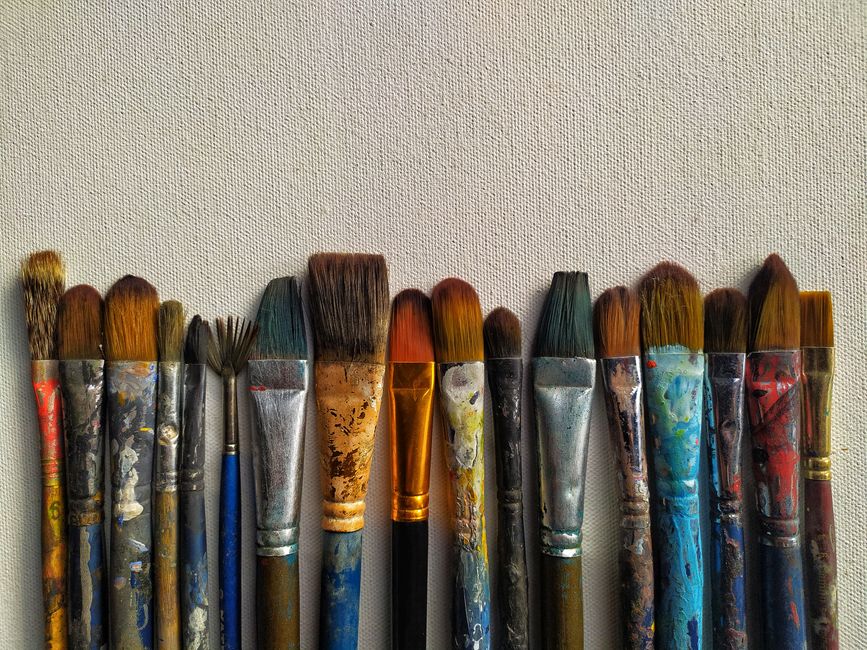
Brush shape determines the mark a brush makes on the canvas or surface. The most widely used shapes in acrylic painting include flat, round, filbert, fan, and angular brushes. Each shape produces different effects and serves different purposes.
Flat brushes have a square end with straight bristles. They are often used for bold, sweeping strokes, filling in large areas, and creating sharp edges. The width of a flat brush allows the painter to cover space quickly while still offering some control for straight lines. Round brushes come to a point at the tip. They are versatile for both broad strokes when pressed down and fine lines when used with the tip. Round brushes are commonly used for outlining, detail work, and calligraphic marks.
Filbert, Fan, and Angular Brushes
Filbert brushes have an oval or rounded tip, combining the qualities of a flat and round brush. They are useful for blending, soft edges, and creating organic shapes such as petals or leaves. The curved edge helps reduce harsh lines. Fan brushes have bristles spread out in a fan shape. They are used for blending, texturing, and creating effects like grass or clouds. Fan brushes can be used to soften layers or to apply paint in a dry-brush technique. Angular brushes, also called angled flat brushes, have bristles cut at a diagonal. They are effective for filling corners, creating curved strokes, and achieving precise edges.
Each shape offers a different way to manipulate paint. The painter’s choice of brush shape influences the visual texture and detail level of the final work. For example, a flat brush may be chosen for a background wash, while a round brush might be used for intricate details. Many painters maintain a collection of several shapes to accommodate different stages of a painting.
Brush Sizes and Scale of Work
Brushes are typically numbered from very small (e.g., 000) to very large (e.g., 30 or more), although numbering systems vary between manufacturers. Size affects the amount of paint a brush can hold and the width of the stroke. Smaller brushes allow for fine details and controlled lines, while larger brushes cover broader areas efficiently.
When selecting brush sizes, the scale of the painting is an important consideration. For a large canvas, using a brush that is too small can make the process time‑consuming and may lead to uneven coverage. Conversely, a large brush on a small detailed area may be impractical. Painters often use a range of sizes, from a size 1 or 2 for details to a size 12 or larger for backgrounds. The interplay between brush size and the painting surface determines how quickly one works and the level of precision achievable.
Another factor is the technique. For glazing, where thin transparent layers are applied, a medium‑sized brush with soft bristles can help distribute paint evenly. For impasto techniques that use thick paint, a large stiff brush may be more effective. The brush size also affects how the paint is loaded; larger brushes hold more paint, allowing for longer continuous strokes without reloading.
Brush Care and Longevity with Acrylics
Because acrylic paint dries quickly and can harden in bristles, proper care is essential to extend the life of brushes. Leaving acrylic paint to dry on a brush can ruin the bristles, making them stiff and misshapen. Cleaning brushes promptly after use with water and a mild soap helps remove paint residues. For synthetic brushes, a gentle soap or brush cleaner can be used, while natural hair brushes may require more careful handling to avoid damaging the hairs.
Storing brushes in a dry, upright position or lying flat prevents bending of the bristles. Many painters use brush holders or roll‑up cases to protect the brush tips. Reshaping the bristles while they are damp helps maintain the intended shape. Brushes that are well‑maintained can last for many painting sessions, whereas neglected brushes may need to be replaced more often.
The quality of the brush also influences longevity. Brushes with ferrules that are securely attached to the handle and bristles that are firmly set tend to withstand repeated use and cleaning. When purchasing brushes, inspecting the ferrule for any looseness can give an indication of durability. Some brands, including Artful Palette, design brushes with acrylic painters in mind, using materials that resist the effects of the paint.
Selecting Brushes for Specific Acrylic Techniques
Different acrylic techniques place varying demands on brushes. For example, dry brushing involves using a brush with very little paint to create a scratchy, textured effect. This technique often works best with a stiff, flat brush that has some roughness. On the other hand, wet‑on‑wet techniques require brushes that can carry enough water and paint without releasing it too quickly.
Washes and glazes benefit from brushes that hold a lot of liquid and release it smoothly. Synthetic brushes with soft, fine tips are often chosen for these applications. For impasto, where thick paint is applied, a brush with substantial stiffness is needed to move the paint without bending. Hog bristle brushes or stiff synthetic brushes are commonly used for this purpose. Stippling, a technique of applying many small dots, can be done with a round brush or a stencil brush, depending on the desired dot size.
When trying a new technique, painters often experiment with several brush types to see how the paint responds. There is no single correct brush for a given technique, as personal handling and paint viscosity also play roles. Understanding the general tendencies of different brush properties helps painters narrow down choices and adapt to their own working methods.
Evaluating Brush Quality and Making Informed Choices
The construction of a brush affects its performance. A well‑made brush has bristles that are evenly trimmed, a ferrule that is rust‑resistant and firmly crimped, and a handle that feels balanced in the hand. Cheaper brushes may shed bristles or lose shape quickly, which can interfere with painting. Investing in a few high‑quality brushes in key shapes and sizes can provide more consistent results than a large set of low‑cost brushes.
Painters may consider factors such as the spring of the bristles—how much they bounce back after being bent—and their ability to hold a point or edge. Testing a brush with water or a small amount of acrylic paint before purchasing can give an indication of its behavior. Many art supply stores allow customers to test brushes, and some brands offer sample packs. Reading reviews from other painters can also provide insights, though individual experiences vary.
The decision of which brushes to buy ultimately rests on the painter’s personal style, preferred techniques, and budget. By understanding the characteristics of bristle materials, shapes, and sizes, painters can make choices that support their artistic intentions. There is no universal set of brushes that works for everyone, but a thoughtful selection process can lead to a more satisfying painting experience.